


Every dealership has some form of key management system.
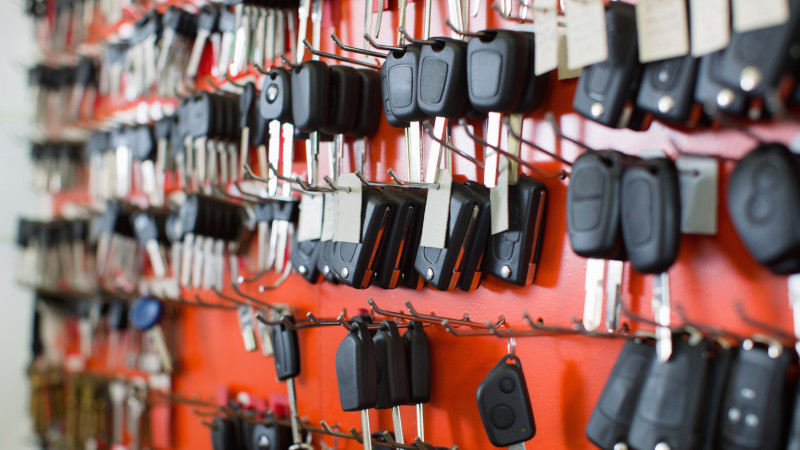
It might be:
- A pegboard behind reception
- A lockbox in the service manager’s office
- A drawer of envelopes and spare keys
- A paper sign-out sheet (that may or may not be up to date)
For smaller dealerships, these methods can work — at least for a while.
But as operations grow, most dealerships reach a point where manual tracking quietly stops working.
The challenge?
Most don’t recognize it until it’s already costing them time, money, and risk exposure.
Where Manual Key Tracking Breaks Down
Manual systems depend on one thing:
Perfect human consistency.
Every employee must:
- Sign keys out
- Sign keys back in
- Return them to the correct location
- Follow the process every time — even during peak hours
The Reality in a Busy Dealership
On a typical high-pressure day:
- Customers are waiting
- Sales and service are juggling priorities
- Vehicles are being moved constantly
What happens?
- The sign-out sheet gets skipped
- Keys are placed on the wrong hook
- Someone takes a key “just for a minute”
- Processes are bypassed for speed
This isn’t a people problem.
It’s a system limitation — manual processes don’t hold up under real-world dealership pressure.
The Accountability Gap: “Who Had the Key Last?”
One of the biggest failures of manual systems is the lack of a reliable audit trail.
When a key goes missing, the question is always:
“Who had it last?”
And the answer is usually unclear.
Why Manual Logs Fail
- Entries are incomplete or missing
- Keys are returned without being logged
- Multiple people may handle a key without documentation
This creates a gap where:
- The key’s history becomes untraceable
- Time is wasted trying to figure it out
- Replacement becomes the default solution
The Bigger Issue: Accountability Erodes
When no one trusts the system:
- Staff stop following it consistently
- Processes become informal
- Risk increases without anyone noticing
At that point, the system still exists — but it no longer works.
The Scaling Problem: Growth Breaks Manual Systems
Manual tracking can work in a small environment.
But dealerships are rarely static.
As You Scale, Complexity Increases
- More vehicles
- More employees
- More departments (sales, service, detail, management)
- Multiple shifts
Each of these increases:
- Key volume
- Daily transactions
- Opportunities for error
Multi-Location Dealerships Face Even Greater Challenges
- Vehicles move between rooftops
- Trade-ins are transferred
- Loaners are returned to different locations
Manual systems were never designed to handle:
- Cross-location tracking
- Real-time accountability
The Operational Disconnect
Here’s the irony:
Most dealerships have modernized nearly every part of their operations:
- CRM systems for customer data
- DMS platforms for inventory and finance
- Digital reporting and analytics
But vehicle keys — representing hundreds of thousands or millions in inventory — are often managed with:
- Pegboards
- Clipboards
- Paper logs
This gap between digital operations and physical key control is one of the most overlooked risks in the dealership environment.
What Changes With Electronic Key Management
Moving beyond manual tracking isn’t just about upgrading a cabinet — it’s about eliminating reliance on human memory.
Electronic key management systems automate three critical functions:
- Authentication
Every key transaction is tied to a specific user.
Access is controlled through:
- PIN codes
- Access cards
- Biometrics
Result:
- No guessing who took a key
- Clear accountability every time
- Automatic Logging
Every action is recorded in real time.
- Keys removed → logged
- Keys returned → logged
- Time-stamped and user-specific
Result:
- A complete, unbroken audit trail
- Accurate records without manual effort
- Proactive Alerts
Instead of reacting to problems, the system flags them early:
- Keys not returned on time
- After-hours access
- Unusual usage patterns
Result:
- Issues are addressed before they impact operations
The Tipping Point: Signs It’s Time to Upgrade
There’s no single number that defines when manual systems fail — but there are clear warning signs.
Your Dealership May Have Reached the Tipping Point If:
- You replace multiple keys each month
- Staff frequently search for keys
- There’s no clear answer to “Who had this key last?”
- Your insurance provider has questioned key control practices
- You’ve experienced or nearly experienced unauthorized vehicle movement
If any of these apply:
Your manual system isn’t just strained — it’s already broken.
How to Evaluate Your Next Move
Before making a decision, focus on real data — not assumptions.
Start With a Simple Assessment:
- Count the total number of keys in circulation
- Track time spent dealing with key-related issues
- Review annual key replacement costs
- Check insurance requirements and expectations
This gives you a clear picture of:
- Operational impact
- Financial exposure
- Risk level
Choosing the Right Approach
Not every dealership needs the same solution.
For Smaller Operations:
- Improved manual processes may be sufficient
- Locked storage + consistent logging can help
For Growing or High-Volume Dealerships:
- Manual systems typically can’t scale
- Electronic systems provide consistency and control
The key is making an informed decision based on:
- Volume
- Risk tolerance
- Operational complexity
Final Thoughts: It’s Not About Technology — It’s About Control
Dealerships don’t move away from manual key tracking because it’s outdated.
They move away because it stops working.
The transition to electronic key management is really about:
- Restoring accountability
- Improving efficiency
- Reducing risk
- Aligning key control with the rest of your business systems